
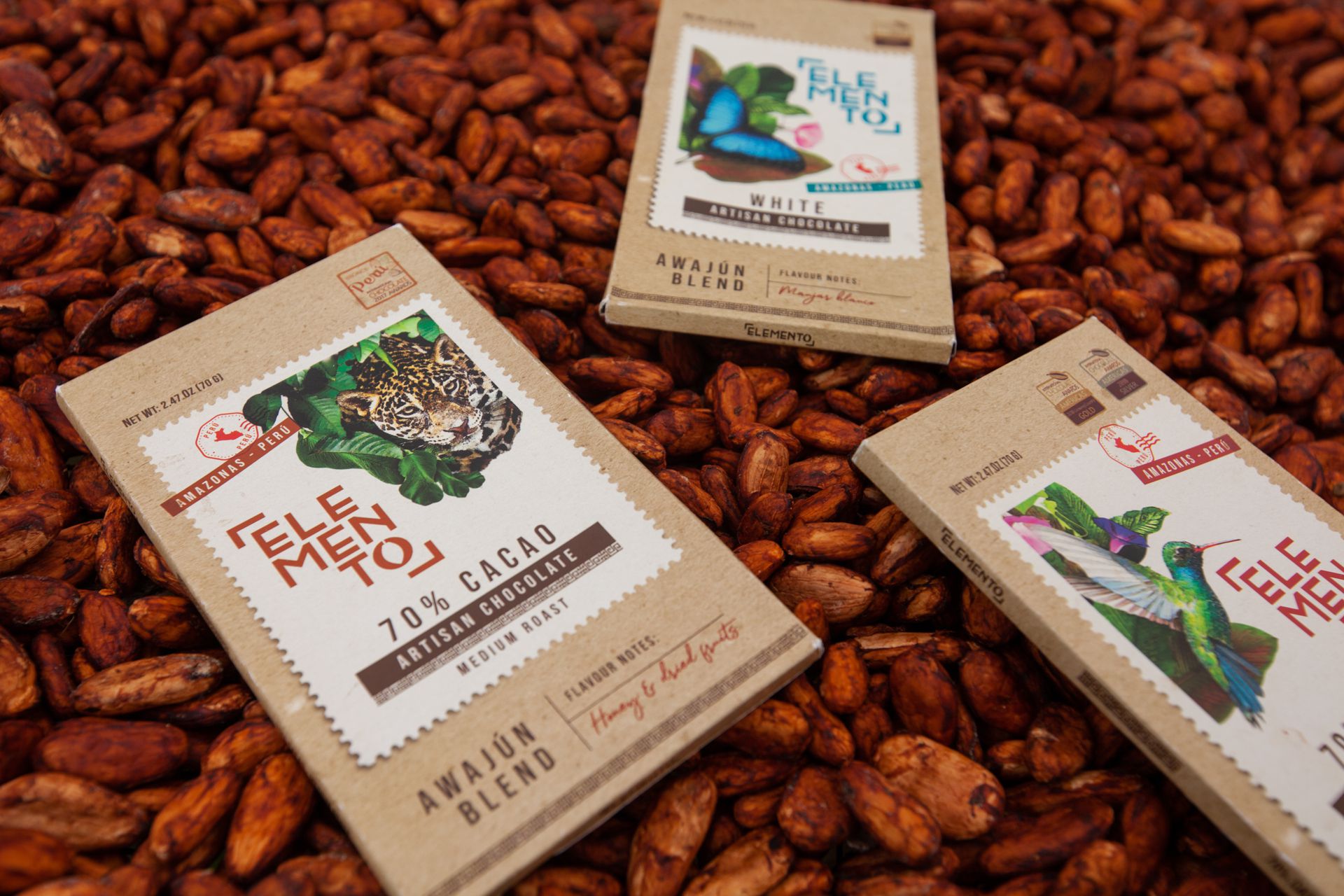
From the harvest of the fruit to the taste of a chocolate they pass around 20 days, several interprovincial trips and many physical processes. We tell you how a good chocolate is produced
The work begins at 6: 00 in the morning in the Awajún village, in the Peruvian Amazon, near Ecuador. With the first rays of the sun, Goyo Sanchun and other farmers in the community are waiting to harvest the fruits of cocoa which grows natively (this means the seed has not been manipulated by man) in the north-east of our country. This ritual takes place only in late March or early April; or in late July or early August, the rest of the months are left to rest the trees.
Goyo is the right hand of Lorenzo Llosa, a social communicator who discovered that there is nothing he loves more than a good chocolate. His curiosity made him travel to the depths of the Peruvian Amazon to find a good cocoa, one that will provide the guests with citrus and fruit flavors when they try it. This is how Elemento was born, a Peruvian chocolate brand that has already won international awards and seeks to enhance payment just to the communities.
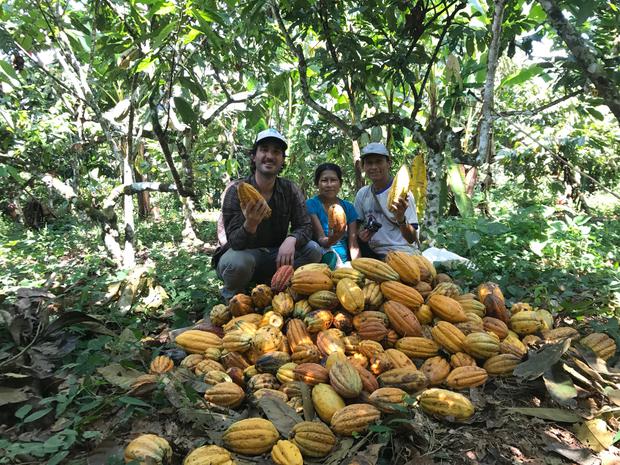
We continue with the chocolate route (process). After his harvest, «the cocoa grains go through a fermentation that lasts between seven and eight days depending on the climate«, explains Llosa. «This fermentation is important to achieve the flavors that everyone expects from chocolate«, add.
Grain drying is the next step. «The moisture level should be reduced until it is 7%. The most important processes are done by native communities and are done in the same field«, indicates the creator of Element.
The five Wajun communities work together and produce a mature and clean grain. They continue to work together during fermentation and drying. Only this first part of the process lasts 15 days.
Once it is over, Lorenzo and another group of people travel from Lima. First by plane to Jaen; then they take a collective to Imacita; they go up to a small small for an hour by the Marañón River; and they walk seven hours to reach the Awajún village. They collect the cocoa fruits and return to Lima to continue with the second part of the process. Here are 18 days.
From CACAO to CHOCOLATE:
The cocoa grain is selected, cleaned and boiled. «Each chocolate company has its own process and this can vary. We have three different levels of toast.«comment. Llosa did not give us her magic formula but indicates - so we have an idea - that 100 kilos of cocoa beans can be toast in an hour..
Once toasted, the grain is derailed or faded. «You take out his shell and leave it in cocoa nibs. These are milling in a mill. They are crushed and as a result a cocoa liquor is obtained. It's like a pasta.»comment.
This paste enters a refiner (a kind of giant pot with stone rollers). Here you add the cane sugar. They are poured between 40 and 50 kilos of cocoa and sugar, and thanks to the stone rollers the mixture is refined. «Friction generates a temperature that will make it liquid. It will give you a particular texture and taste. So every chocolate has a different profile.«, adds the specialist.
After this process is continued with the tempered. «The mixture is raised to 48 degrees. This will make it crystallized, get the crochant sheets and that particular chocolate glow»explain. A marble stone is used for this process.
We are already about to conclude this impeccable process. Packing is the last step. «Since the elements of nature have no mold, neither does our chocolate. The fine chocolate sheets are packed in paper bags.»It's clear.
Each chocolate you try is different, and this has to do with your toast, the percentage of cocoa, the area where the fruit grew, the community that harvested it and the date it was collected. Finally, until a chocolate - a prize winner - reaches a gondola have spent 20 days, by many hands and, above all, by a lot of dedication.
ON ELIMENT:
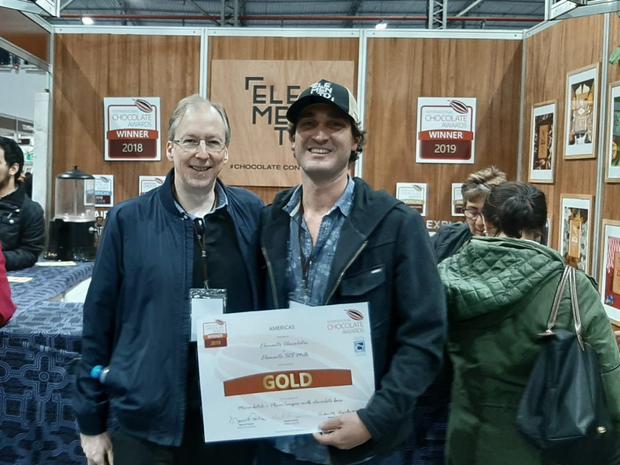
Element won in July as The Best Chocolate with Milk at the International Chocolate Awards 2019, defeating all Latin American countries. Soon, Llosa will travel with her team to Florence, Italy, to compete with the best chocolates in the world.
Sources: Trade Journal, Photos: Dissemination